

If you have Indian ancestry, an OCI card gives you lifelong visa-free entry to India – no renewals, no embassy visits, and no stay limits. For everyone else, the e-Visa is the straightforward digital option. Choosing between OCI and a regular Indian visa depends entirely on your eligibility, how often you visit India, and what you plan to do there.
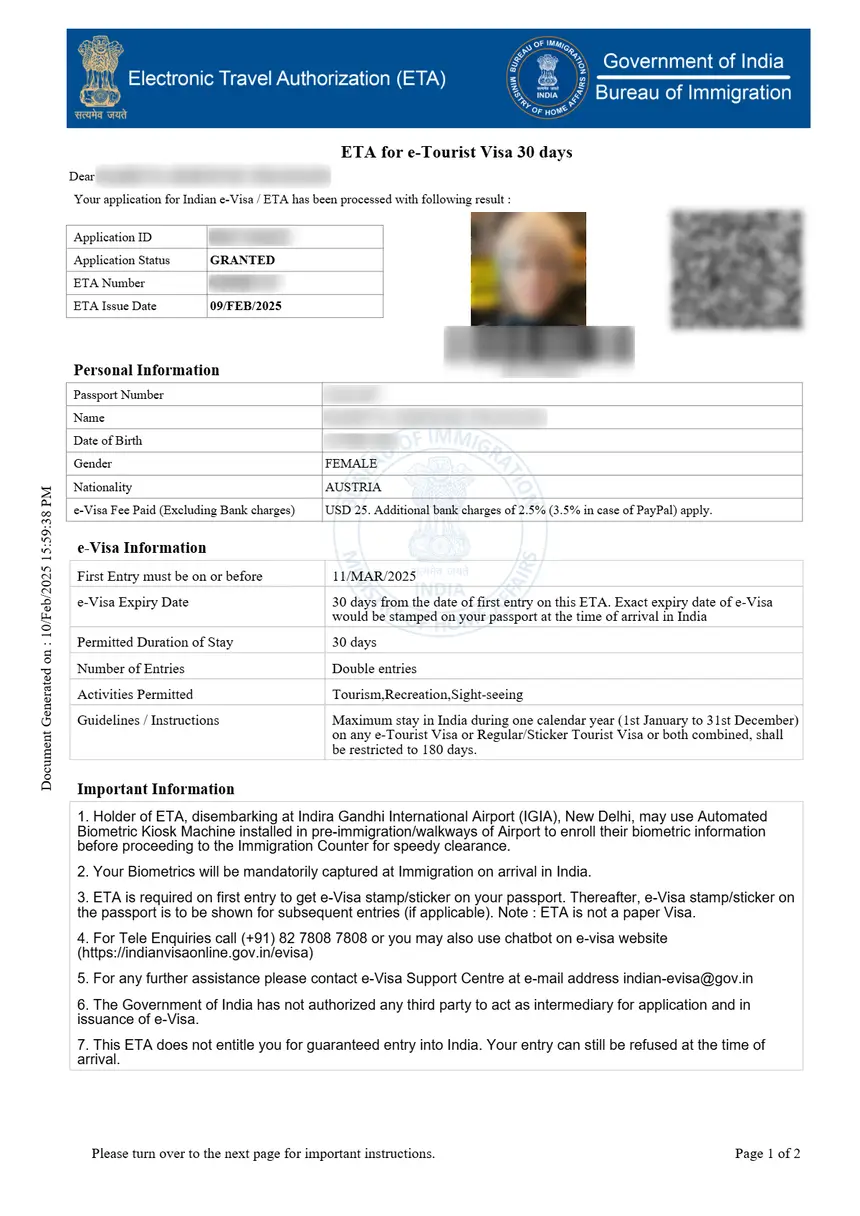
This guide breaks down the differences between an OCI (Overseas Citizen of India) card and a standard Indian visa – covering eligibility, cost, rights, restrictions, and practical scenarios – so you can decide which path is right for you.
What Is an OCI Card?
The Overseas Citizen of India (OCI) card is a lifelong immigration document issued by the Government of India to people of Indian origin. It grants multiple-entry, multi-purpose access to India without needing a visa for each trip. Think of it as a permanent visa stamped into a separate booklet that you carry alongside your foreign passport.
OCI was introduced in 2005 as a replacement for the earlier PIO (Person of Overseas Indian Origin) card scheme. The two were merged in 2015, and all valid PIO cards were deemed equivalent to OCI cards.
To be eligible for OCI, you must meet at least one of these criteria:
- You were a citizen of India at any time after January 26, 1950
- You were eligible to become a citizen of India on January 26, 1950
- You belong to a territory that became part of India after August 15, 1947
- You are a child, grandchild, or great-grandchild of such a person
- You are a minor child whose both parents are Indian citizens or OCI holders
- You are the spouse of an Indian citizen or OCI holder (and the marriage has been registered for at least two years)
Who cannot get OCI: Citizens of Pakistan, Bangladesh, or individuals whose parents or grandparents held citizenship of those countries are not eligible. Former Indian citizens who voluntarily acquired Pakistani or Bangladeshi citizenship are also excluded.
What Is an Indian Visa?
An Indian visa is a travel authorization issued for a specific purpose and duration. Unlike OCI, a visa has an expiry date, a defined number of entries (single or multiple), and limits on how long you can stay per visit.
India offers several visa pathways:
| Type | How You Get It | Typical Validity | Best For |
|---|---|---|---|
| e-Visa | Online application | 30 days, 1 year, or 5 years | Tourists, business visitors, medical travelers |
| Regular sticker visa | Embassy/consulate | Up to 10 years (US citizens) | Long-term visitors, work, students |
| Transit visa | Online or embassy | 15 days | Layovers and short stopovers |
The e-Visa is the most popular option for short-term visitors. You apply at indianvisaonline.gov.in, upload documents, pay online, and receive approval by email within about 72 hours. For a detailed walkthrough, see our guide on how to apply for India e-Visa online.
For a complete breakdown of all visa categories, visit our India visa types guide.
OCI vs Indian Visa: Side-by-Side Comparison
This table highlights the key differences between an OCI card and a standard Indian visa:
| Feature | OCI Card | Indian e-Visa | Regular Visa (e.g., 10-year) |
|---|---|---|---|
| Eligibility | People of Indian origin only | 160+ nationalities | All nationalities (category-dependent) |
| Validity | Lifetime (no expiry) | 30 days to 5 years | Up to 10 years |
| Entry type | Multiple entry, unlimited | Multiple (1-year and 5-year) | Multiple (varies) |
| Stay per visit | Unlimited | 90 days (tourist), 180 days (business) | 180 days per visit (varies) |
| Registration | None required | None | Required if staying 180+ days |
| Cost | $275 (new) / $25 (miscellaneous services) | $10 to $80 | $160 (US citizens) |
| Application process | Online + VFS appointment + biometrics | Fully online | Embassy/consulate appointment |
| Processing time | 4 to 8 weeks | 72 hours | 5 to 10 business days |
| Can work in India? | No (separate work permit needed) | No | Only with employment visa |
| Can own property? | Yes (except agricultural land) | No | No (tourist/business visas) |
| Can vote? | No | No | No |
| Can hold a SIM/bank account? | Yes, simplified process | Difficult | Difficult |
| Entry points | All immigration checkpoints | 28 airports + 5 seaports | All immigration checkpoints |
Cost Comparison: OCI vs e-Visa
The cost difference is significant, especially for frequent travelers:
| Scenario | OCI Cost | e-Visa Cost | Regular Visa Cost |
|---|---|---|---|
| One-time application | $275 | $10 to $80 | $160 |
| 5 trips over 5 years | $275 (same card) | $50 to $400 (each trip or multi-year) | $160 (single 10-year visa) |
| 10 trips over 10 years | $275 (same card) | $100 to $800 | $160 (same 10-year visa) |
| 20+ trips over a lifetime | $275 total | $200+ (repeated applications) | $160 per 10-year renewal |
The OCI card pays for itself if you plan to visit India more than twice. For someone who visits India annually or more often, the savings compound rapidly – and you never have to deal with embassy appointments or online applications again.
For a full breakdown of visa costs by type and duration, see our India visa fees guide.
Rights and Restrictions: What OCI Gives You (and What It Does Not)
What OCI holders CAN do
- Enter and leave India freely for an unlimited number of visits
- Stay in India indefinitely without registration (visits over 180 days no longer require registration since 2022)
- Own residential and commercial property in India
- Open bank accounts and invest in Indian markets
- Study at Indian educational institutions
- Practice professions in India (medicine, law, architecture, etc.) subject to applicable regulations
- Use dedicated OCI immigration counters at major airports
What OCI holders CANNOT do
- Vote in Indian elections
- Buy agricultural land, farmland, or plantation property
- Hold a constitutional post (MP, MLA, judge, etc.)
- Work in government jobs
- Travel to restricted/protected areas without a permit (same as foreign nationals)
What e-Visa holders experience
The e-Visa is simpler but more limited. You get a defined stay period (90 days for tourists, 180 for business), you cannot work, and you cannot own property. Your passport is stamped at immigration with the visa details and you must leave before the stay period expires. Overstaying leads to fines, detention, and possible future visa denials.
When to Choose OCI Over a Regular Visa
Choose OCI if:
– You were born in India and later became a citizen of another country
– Your parents or grandparents are/were Indian citizens
– You visit India at least once a year
– You want to stay in India for extended periods (months, not weeks)
– You want to own property or start a business in India
– You want to avoid repeated visa applications and embassy visits
– You want the convenience of immigration counter access without visa stamps
Choose a regular Indian visa (e-Visa or sticker) if:
– You have no Indian ancestry
– You visit India rarely (once every few years)
– Your trip is short (under 90 days) and purpose-specific (tourism, business meetings, medical treatment)
– You want the fastest possible application process (72-hour e-Visa)
– You are a citizen of Pakistan or Bangladesh (OCI is not available to you)
Choose a regular visa even if eligible for OCI if:
– You need a work visa specifically (OCI does not grant work authorization)
– You need a student visa with specific institutional sponsorship
– Your trip involves restricted areas that require a special permit regardless of immigration status
OCI Application Process: What to Expect
Applying for OCI is more involved than an e-Visa. Here is the general process:
- Online application – Complete the form at ociservices.gov.in. Upload your photograph, signature, and supporting documents (passport, proof of Indian origin, previous Indian passport if applicable).
- VFS appointment – Submit your documents and biometrics at a VFS Global center in your country of residence. This is mandatory – you cannot skip the in-person step.
- Processing – Takes 4 to 8 weeks on average. Complex cases (missing documents, name changes, marriage-based applications) may take longer.
- Receive OCI booklet – A separate booklet (looks like a passport) is delivered to you by mail or VFS pickup.
- Carry both documents – When traveling to India, you must carry both your foreign passport and the OCI booklet.
The e-Visa, by comparison, takes about 15 to 20 minutes to apply online and you receive approval within 72 hours. No biometrics, no appointment, no booklet.
OCI Renewal and Re-Issuance Rules
One of OCI’s most practical benefits is that the card itself is valid for life. However, you do need to get a new booklet in two situations:
| Situation | What to Do | Cost |
|---|---|---|
| Passport renewed (new passport number) | OCI card must be re-issued online with new passport details | $25 (miscellaneous services) |
| Age 20 and under (minor) | OCI booklet must be re-issued each time a new passport is obtained | $25 |
| Age 21 and over | OCI booklet is valid for life with the passport on file – update only when passport is renewed | $25 |
The re-issuance process is online and typically takes 2 to 4 weeks. You do not need a VFS appointment for re-issuance – it is done entirely through ociservices.gov.in.
Can You Hold Both OCI and an Indian Visa?
No. If you hold a valid OCI card, you do not need and cannot hold an Indian visa simultaneously. OCI replaces the visa function entirely. If you apply for OCI while holding an existing Indian visa, the visa is effectively superseded.
However, if your OCI application is pending and you need to travel to India urgently, you can still use your existing valid visa for that trip. The OCI card will be processed independently.
Special Cases and Edge Cases
Former Indian citizens who naturalized elsewhere
If you gave up your Indian citizenship to become a citizen of the US, UK, Canada, Australia, or another country, you are eligible for OCI. In fact, this is the most common OCI use case. You will need your old Indian passport or surrender certificate as proof of previous citizenship.
Indian-origin but never held Indian citizenship
If your parents or grandparents were Indian citizens but you were born abroad and never held Indian citizenship, you are still eligible for OCI through the ancestry route. You will need birth certificates and parents’ or grandparents’ Indian passport copies.
Spouse of an Indian citizen or OCI holder
You can apply for OCI as the spouse of an Indian citizen or OCI holder, but only if the marriage has been registered for at least two years. A marriage certificate and your spouse’s proof of Indian citizenship or OCI card are required.
Renunciation of Indian citizenship
When you become a citizen of another country, Indian law requires you to formally renounce your Indian citizenship and surrender your Indian passport. Failure to do so can result in penalties. The surrender certificate you receive is a key document for your OCI application.
Travel to restricted areas
Both OCI holders and regular visa holders may need special permits to visit certain restricted areas in India (parts of Arunachal Pradesh, Sikkim, parts of Ladakh, Andaman and Nicobar Islands, etc.). OCI status does not exempt you from these requirements.
FAQs About OCI vs Indian Visa
Is OCI the same as dual citizenship?
No. India does not recognize dual citizenship. OCI is not citizenship – it is a lifelong visa-like status. OCI holders cannot vote, hold constitutional office, or buy agricultural land. You remain a foreign national with special immigration privileges.
Can OCI holders work in India?
No. OCI does not grant work authorization. If you want to work in India, you need a separate employment visa regardless of your OCI status. OCI does allow you to practice certain professions (medicine, law, architecture, chartered accountancy) subject to applicable regulations, but this is different from holding a salaried job.
How long does OCI processing take?
Typically 4 to 8 weeks from the date of VFS submission. Complex cases involving missing documents, name changes, or marriage-based applications may take longer. The e-Visa, by contrast, is processed within about 72 hours.
Can I apply for OCI if my grandparents were Indian citizens?
Yes. OCI eligibility extends to children, grandchildren, and great-grandchildren of persons who were Indian citizens or eligible for Indian citizenship. You will need birth certificates and your grandparents’ Indian passport copies or other proof of Indian origin.
What is the difference between OCI and a PIO card?
The PIO (Person of Overseas Indian Origin) card was a separate scheme that was merged with OCI in 2015. All valid PIO cards are now deemed equivalent to OCI cards. New applications for PIO cards are no longer accepted – only OCI is available.
Do OCI holders need to register with the police in India?
No. Since 2022, OCI holders are no longer required to register with the Foreigners Regional Registration Office (FRRO) regardless of how long they stay in India. This is a significant convenience benefit over regular visa holders, who may need registration for stays exceeding 180 days.
Can I buy property in India with an OCI card?
Yes, with one exception. OCI holders can buy residential and commercial property in India but cannot purchase agricultural land, farmland, or plantation property. This restriction applies to all foreign nationals, including OCI holders.
What happens if my OCI card has an old passport number?
When you renew your passport, you must apply for OCI re-issuance online through ociservices.gov.in. The cost is $25. You can travel with your old OCI booklet and new passport while the re-issuance is being processed, but you should carry proof that you have applied for the update.
Is the e-Visa cheaper than OCI for occasional travelers?
Yes. If you visit India once every few years, the e-Visa is far more cost-effective. The 30-day e-Tourist visa costs just $10 to $25, and the 1-year option costs $40. OCI only makes financial sense if you visit India at least twice, and its real value comes from convenience and unlimited stays rather than cost savings alone.
Can citizens of Pakistan or Bangladesh apply for OCI?
No. Citizens of Pakistan and Bangladesh – and individuals whose parents or grandparents held citizenship of those countries – are not eligible for OCI. They must apply for regular Indian visas through the embassy or consulate.