India offers multiple visa categories for travelers, workers, medical patients, and business visitors – understanding the right type for your trip is the first step to a successful application. The Indian government issues visas through both traditional embassy channels and the online e-Visa system, each designed for a specific purpose and duration.
Whether you are planning a short holiday, attending a business meeting, seeking medical treatment, or relocating for employment, choosing the correct visa type avoids delays, rejections, and unnecessary costs. This guide covers every major India visa category, who qualifies, how long each one lasts, and how to apply.
India e-Visa Categories
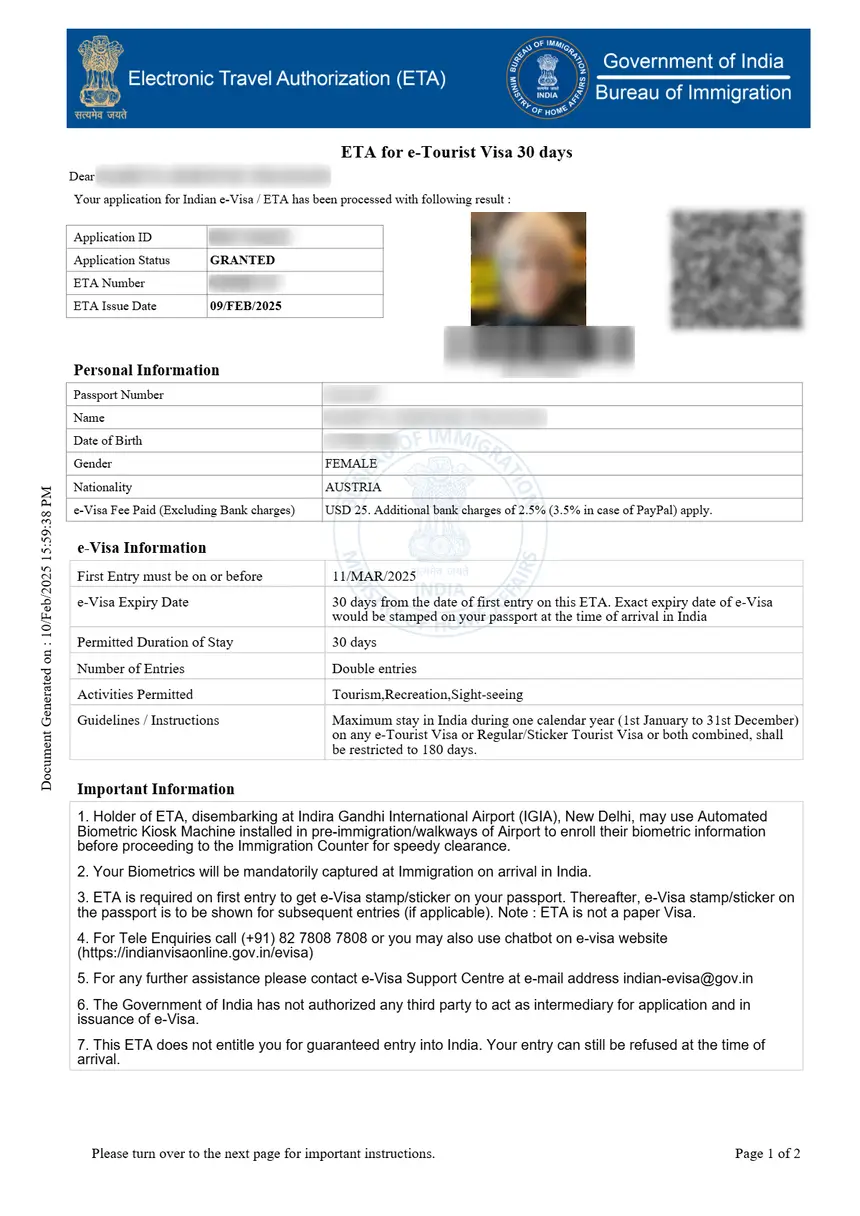
The India e-Visa system is the fastest and most convenient option for most travelers. Applications are submitted entirely online, and approvals typically arrive within 72 hours. India offers five distinct e-Visa sub-categories:
| e-Visa Type | Purpose | Validity | Entries | Eligible Countries |
|---|---|---|---|---|
| e-Tourist Visa | Sightseeing, visiting family, yoga programs | 30 days, 1 year, or 5 years | Double or Multiple | 170+ countries |
| e-Business Visa | Business meetings, trade, conferences | 1 year or 5 years | Multiple | 170+ countries |
| e-Medical Visa | Medical treatment at recognized hospitals | 60 days | Triple | 170+ countries |
| e-Medical Attendant Visa | Accompanying a medical e-Visa holder | 60 days | Triple | 170+ countries |
| e-Conference Visa | Attending government-organized conferences | 30 days | Single | 170+ countries |
The e-Tourist Visa is by far the most commonly issued. US citizens can choose from three validity options – a 30-day e-Tourist Visa costs around $25, the 1-year option costs $40, and the 5-year option costs $80, with a 2.5% bank processing fee added in each case.
For more details on tourist-specific options, see our India Tourist e-Visa guide.
Regular (Sticker) Visa Categories
For travelers who need longer stays, specific work authorization, or come from countries not eligible for the e-Visa, India issues traditional sticker visas through embassies and consulates. These require in-person applications via the Indian Visa Online portal (indianvisaonline.gov.in).
Tourist Visa
The regular tourist visa is available for citizens of countries not eligible for the e-Visa, or for travelers who need a longer validity than what the e-Visa offers. It is typically issued for 6 months, 1 year, or up to 10 years (for US citizens). Multiple entries are common. You cannot use a tourist visa for employment, business activities, or journalism.
Business Visa
A business visa is required for anyone conducting commercial activities in India – attending meetings, exploring trade opportunities, recruiting workers, or setting up industrial ventures. It is typically valid for 1 year to 5 years with multiple entries. Applicants need a letter from the sponsoring Indian company detailing the nature and duration of business activities. Learn more in our India Business e-Visa guide.
Employment Visa
If you are taking up a job in India, you need an employment visa. This category covers skilled professionals, teachers, engineers, and anyone with a confirmed offer from an Indian employer. The visa is valid for the duration of the employment contract (up to 5 years). The sponsoring company must be registered in India, and the applicant must earn a minimum annual salary of $25,000 (exceptions apply for ethnic cooks, language teachers, and translators). For a full breakdown, see our India Employment Visa guide.
Medical Visa
India is a leading destination for medical tourism, and the medical visa facilitates treatment at recognized Indian hospitals. The visa is valid for up to 1 year with triple entries, allowing the patient to make follow-up visits. Applicants must provide a letter from a recognized hospital in India confirming the treatment plan. A medical attendant visa can be issued to up to two accompanying family members. Read our India Medical Visa guide for the full application process.
Student Visa
Students admitted to recognized Indian educational institutions can apply for a student visa. The visa is valid for the duration of the course (up to 5 years) with multiple entries. Applicants need an admission letter from the institution and proof of sufficient funds to cover tuition and living expenses.
Entry Visa (X-Visa)
The entry visa, commonly called the X-Visa, is issued to foreign nationals of Indian origin and their family members, as well as those who do not fit into other visa categories. This includes spouses of Indian citizens, dependents of employment visa holders, and persons of Indian origin who do not hold an OCI card. The validity varies from 6 months to 10 years. Learn more in our Entry Visa India guide.
Research Visa
Scholars, professors, and researchers visiting India for academic or research purposes need a research visa. It is typically valid for 3 years or the duration of the research project, whichever is shorter. Applicants must provide an invitation from a recognized Indian institution.
Transit Visa
If you are passing through India to reach another destination and need to leave the airport, you require a transit visa. It is valid for 15 days with a maximum stay of 72 hours per visit. You do not need a transit visa if you stay within the airport’s international transit area. For details, see our India Transit Visa guide.
Journalist Visa
Media professionals visiting India for reporting, filming, or documentary work need a journalist visa. It is typically issued for 3 months. Applicants must submit a detailed itinerary and a letter from their employer. Note that activities beyond the stated purpose require prior government approval.
Diplomatic and Official Visa
Diplomats, government officials, and UN passport holders traveling on official business are eligible for diplomatic or official visas. These are issued free of charge through government-to-government channels.
OCI and PIO Cards
Beyond traditional visas, India offers two long-term status options for people of Indian origin:
| Feature | OCI Card | PIO Card (merged into OCI) |
|---|---|---|
| Eligibility | Former Indian citizens (after Jan 26, 1950) and their descendants up to 4 generations | Merged into OCI since 2015 |
| Validity | Lifetime | Lifetime (existing cards honored) |
| Multiple Entry | Unlimited | Unlimited |
| Work Rights | Yes (except agricultural/farm land) | Yes |
| Residency Requirement | None | None |
The Overseas Citizen of India (OCI) card is not technically a visa – it is a lifelong multi-entry permit. OCI holders can live and work in India indefinitely but cannot vote, hold public office, or buy agricultural land. For a detailed comparison, see our OCI vs Indian Visa guide.
How to Choose the Right Visa Type
Use this quick decision framework:
- Short visit for tourism or sightseeing (under 60 days)? Apply for the 30-day e-Tourist Visa online.
- Frequent traveler to India? The 1-year or 5-year e-Tourist Visa offers better value.
- Business meetings or trade conferences? The e-Business Visa covers most short-term business needs.
- Medical treatment in India? Apply for the e-Medical Visa (60 days) or regular Medical Visa (up to 1 year).
- Working in India? You need a regular Employment Visa – the e-Visa does not cover employment.
- Student at an Indian university? Apply for a Student Visa through the embassy.
- Of Indian origin? Consider the OCI card for lifelong access without visa renewals.
- Transiting through India? A Transit Visa (72 hours) is needed only if you leave the airport.
Quick Comparison: e-Visa vs Regular Visa
| Feature | e-Visa | Regular (Sticker) Visa |
|---|---|---|
| Application method | Online only | In-person at embassy/VFS |
| Processing time | 72 hours | 5-15 business days |
| Maximum validity | 5 years | Up to 10 years (US citizens) |
| Categories available | Tourist, Business, Medical, Conference, Medical Attendant | All categories |
| Passport stamp | ETA printout | Sticker in passport |
| Cost (Tourist) | $25-$80 + 2.5% fee | $160 (US citizens) |
| Employment allowed | No | Yes (Employment Visa) |
For a complete breakdown of fees across all visa types, visit our India Visa Fees guide.
FAQs About India Visa Types
How many types of visas does India have?
India issues over 20 visa categories, but the most commonly used are Tourist, Business, Medical, Employment, Student, Entry (X-Visa), Transit, and Conference visas. The e-Visa system covers five sub-categories: e-Tourist, e-Business, e-Medical, e-Medical Attendant, and e-Conference.
Which India visa type is easiest to get?
The e-Tourist Visa is the easiest to obtain. The entire application is online, requires only a passport scan and digital photo, and approval typically arrives within 72 hours. US, UK, Canadian, and Australian citizens all qualify.
Can I convert my tourist visa to a work visa in India?
No, you cannot convert one visa type to another while in India. You must leave the country and apply for the correct visa type from an Indian embassy or consulate abroad. The only exception is in rare cases approved by the Ministry of Home Affairs.
Can I get a 10-year visa for India?
Yes, US citizens can apply for a 10-year Tourist Visa or Business Visa through the regular (non-e-Visa) application process at an Indian embassy or consulate. The 10-year visa is not available through the e-Visa system.
What is the difference between e-Visa and regular visa for India?
The e-Visa is applied for entirely online, processed in about 72 hours, and is limited to Tourist, Business, Medical, Medical Attendant, and Conference categories with a maximum validity of 5 years. The regular visa requires an in-person application at an embassy but covers all categories including Employment, Student, and Research, with validity up to 10 years.
Do US citizens need a visa for India?
Yes, US citizens need a visa to enter India. They can apply for an e-Visa online (for tourism, business, or medical purposes) or a regular sticker visa through an Indian embassy for other purposes like employment or study.
Can I hold two Indian visas at the same time?
No, only one Indian visa can be valid at a time. If you apply for a new visa while an existing one is still valid, the new visa automatically cancels the previous one.
Is the OCI card better than an Indian visa?
For people of Indian origin who visit frequently, the OCI card is far more convenient – it grants lifetime multi-entry access without renewals or embassy visits. However, it does not grant voting rights or the ability to buy agricultural land. For occasional visitors, a 5-year or 10-year tourist visa may be sufficient.